


Cannabis Cultivation • Buying Guide • Industry Pricing
Average Cost of Cannabis Clones Per Plant: 2025 Pricing Guide
A complete breakdown of cannabis clone pricing for home growers and commercial cultivators, including retail costs, wholesale volume discounts, and the hidden factors that determine real value.

Image: Premium HLVD-tested cannabis clones with established root systems ready for cultivation.
TL;DR
- Retail cannabis clone prices typically range from $50 to $69 per plant, with premium HLVD-tested genetics commanding higher prices.
- Many clone nurseries require minimum orders of 3 plants, making the true entry cost $150 to $210 depending on the source.
- Commercial wholesale pricing drops dramatically with volume, ranging from $19 per clone for small orders down to $9.75 for bulk orders of 3,000+ plants.
- Teen plants (18" to 24" tall) cost between $19 and $27 each at commercial volumes, offering faster harvest timelines.
- Free shipping significantly impacts total cost—a $50 clone with $40 shipping costs more than a $69 clone with free delivery.
- The cheapest clone isn't always the best value; HLVD testing, verified genetics, and healthy mother plants prevent costly crop failures.
Understanding cannabis clone pricing
Whether you're a home grower planning your first cultivation project or a commercial operator scaling up production, understanding the average cost of cannabis clones per plant is essential for budgeting and identifying fair market pricing. The cannabis clone market has matured significantly over the past decade, with prices varying widely based on genetics, quality assurance protocols, order volume, and the reputation of the clone nursery.
Cannabis clones—also called cuttings or starts—are genetic copies taken from mother plants that allow cultivators to skip the germination phase and guarantee female plants with known characteristics. This consistency makes clones the preferred starting material for serious growers who want predictable results. However, the convenience and genetic certainty come at a higher upfront cost compared to seeds, making it crucial to understand what you're paying for.
The clone market serves two distinct customer bases with very different pricing structures. Retail customers purchasing one to ten plants for personal cultivation pay premium per-plant prices but benefit from curated strain selections and customer support. Commercial cultivators ordering hundreds or thousands of clones access wholesale pricing that dramatically reduces per-unit costs but requires larger capital outlays and established business relationships.
In this guide, we'll break down current market pricing for both segments, compare costs across different vendors, and explain the factors that should influence your purchasing decisions beyond the sticker price.
Retail pricing: What home growers pay
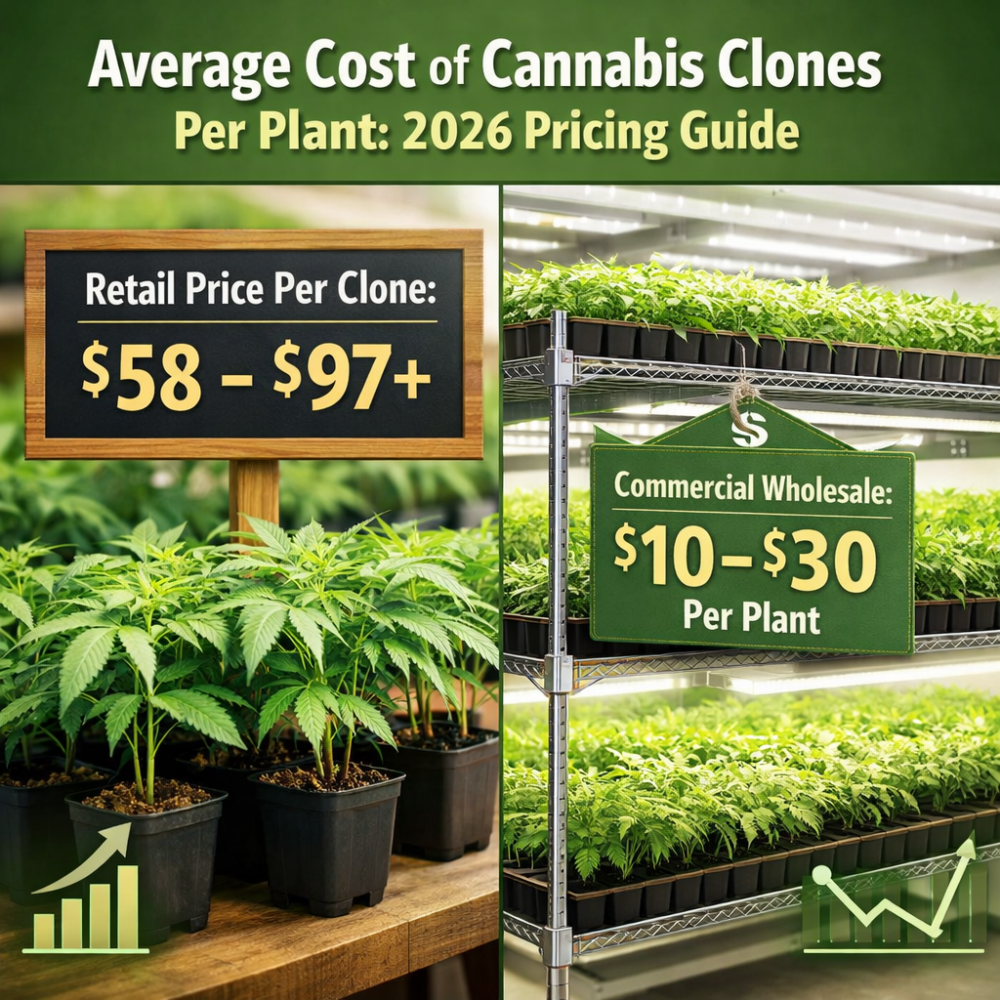
For individual cultivators and home growers, retail cannabis clone prices in 2025 typically fall between $50 and $69 per plant. However, the actual cost of getting clones delivered to your door depends on several factors that aren't immediately obvious when comparing advertised prices.
Let's look at a real-world retail pricing comparison across several cannabis clone suppliers currently operating in the market:
| Order Size | Get Seeds Right Here | Competitor A | Competitor B | Competitor C |
|---|---|---|---|---|
| 1 Clone | $69 | 3 clone min | $50 | 3 clone min |
| 3 Clones | $207 | $180 | $150 | $150 |
| Shipping | FREE | FREE | $40 | $50 |
| Total for 3 Clones | $207 | $180 | $190 | $200 |
This comparison reveals several important dynamics in the retail clone market. First, minimum order requirements are common. Many cannabis nurseries won't sell single clones because the labor, packaging, and shipping costs make individual orders unprofitable. This means growers who only want one or two plants may need to pay a premium for that flexibility or purchase more clones than they need.
Second, shipping costs dramatically affect the true price per clone. A vendor advertising $50 clones with $40 shipping actually costs $90 for a single plant, or roughly $63 per clone when ordering three. Meanwhile, a nursery selling $69 clones with free nationwide shipping delivers better value for small orders despite the higher advertised price.
For home cultivators planning a small grow with two to four plants, the total investment for quality cannabis clones typically ranges from $140 to $280 depending on strain availability, vendor selection, and shipping policies. Budget-conscious growers should calculate total delivered cost rather than comparing sticker prices alone.
Commercial and wholesale clone pricing
Commercial cannabis cultivators operate in an entirely different pricing environment than retail customers. Volume purchasing unlocks wholesale clone pricing that can reduce per-plant costs by 75% or more compared to retail rates. Understanding these price breaks is essential for commercial operations budgeting their propagation expenses.
Here's a breakdown of current commercial cannabis clone pricing for standard 8" to 12" rooted clones based on order quantity:
| Order Quantity | Price Per Clone | Total Investment |
|---|---|---|
| 120 – 239 clones | $19.00 | $2,280 – $4,541 |
| 240 – 479 clones | $18.00 | $4,320 – $8,622 |
| 480 – 719 clones | $16.50 | $7,920 – $11,864 |
| 720 – 999 clones | $15.00 | $10,800 – $14,985 |
| 1,000 – 1,999 clones | $12.00 | $12,000 – $23,988 |
| 2,000 – 2,999 clones | $10.50 | $21,000 – $31,490 |
| 3,000 – 4,999 clones | $9.75 | $29,250 – $48,740 |
The economics become clear when comparing these rates. A commercial operation purchasing 1,000 clones at $12 each spends $12,000 on starting material. That same number of plants purchased at retail rates of $69 each would cost $69,000—nearly six times more. This price differential makes wholesale clone purchasing essential for any operation hoping to achieve profitability.
Commercial buyers should note that wholesale pricing typically requires establishing accounts with licensed clone nurseries, meeting minimum order thresholds, and often committing to scheduled deliveries. Many nurseries offer additional discounts for long-term contracts or recurring orders, further reducing per-plant costs for operations with predictable demand.
Teen plant pricing for faster harvests
Beyond standard rooted clones, commercial cultivators can purchase teen plants—larger, more developed cuttings measuring 18" to 24" tall. Teen plants offer a significant head start in the cultivation cycle, reducing time to harvest by two to four weeks compared to smaller clones. This acceleration can translate to additional harvest cycles per year, making teens attractive despite their higher per-plant cost.
Current teen plant pricing for commercial orders follows this structure:
| Order Quantity | Price Per Teen |
|---|---|
| 1,000 – 2,499 teens | $27.00 |
| 2,500 – 4,999 teens | $24.00 |
| 5,000+ teens | $19.00 |
For large-scale cultivation facilities running perpetual harvest schedules, teen plants can improve operational efficiency despite the higher upfront investment. The math works when faster turnover generates additional revenue that exceeds the incremental cost of teens versus standard clones. Operations should model their specific facility economics to determine which starting material makes financial sense.
Factors that affect cannabis clone cost
Clone pricing isn't arbitrary. Several factors influence what nurseries charge and what buyers should expect to pay for quality starting material.
HLVD Testing and Disease Screening: Hop Latent Viroid (HLVD) has devastated countless cannabis operations, reducing yields by 20% to 50% in infected plants. Nurseries that maintain rigorous HLVD testing protocols and tissue culture propagation from verified clean stock invest significantly in laboratory services and quarantine procedures. These costs are reflected in pricing but protect buyers from catastrophic crop losses.
Genetic Verification and Breeder Cuts: Authentic genetics from respected breeders like Seed Junky Genetics, Cannatique, Compound Genetics, and others command premium prices. Verified breeder cuts with documented lineage cost more than generic or unverified strains because nurseries pay licensing fees and invest in maintaining genetic authenticity. The premium reflects reduced risk of receiving mislabeled or inferior genetics.
Mother Plant Health and Clone Quality: The health and vigor of mother plants directly impacts clone quality. Well-maintained mother plants in optimal growing conditions produce stronger cuttings with better root development and higher survival rates. Nurseries that invest in proper mother plant care, nutrition programs, and environmental controls produce superior clones worth paying more for.
Root Development and Plant Size: Clone pricing correlates with plant development. Larger clones with established root systems cost more because they require additional growing time, space, and resources before sale. However, well-rooted clones transplant more successfully and establish faster, improving outcomes for buyers.
Strain Rarity and Demand: Market dynamics affect pricing for specific genetics. Newly released strains, award-winning cultivars, and rare genetics with limited availability command premiums. Classic strains with abundant mother stock typically cost less. Seasonal demand fluctuations also influence pricing, with spring and early summer typically seeing higher prices as outdoor growers prepare for the season.
Value vs. price: What really matters
Experienced cultivators know that the cheapest cannabis clones rarely deliver the best value. The true cost of starting material includes not just the purchase price but the downstream consequences of that choice.
A $15 clone carrying HLVD can infect an entire facility, destroying tens of thousands of dollars in crops and requiring expensive remediation. Mislabeled genetics waste months of cultivation time producing disappointing results. Weak clones with poor root development fail to establish, requiring replacement purchases and delaying production schedules.
Smart buyers evaluate cannabis clone suppliers based on quality assurance protocols, genetic verification practices, customer reviews, and track record—not just price. The nurseries commanding premium prices often deliver value that far exceeds the additional cost through better survival rates, verified genetics, and disease-free starting material.
For commercial operations, conducting due diligence on clone suppliers is essential. Requesting HLVD test results, touring facilities when possible, and starting with smaller trial orders before committing to large purchases can prevent expensive mistakes. The few extra dollars per clone invested in quality starting material pays dividends throughout the cultivation cycle.
Frequently Asked Questions
How much does a single cannabis clone cost?
Retail cannabis clone prices typically range from $50 to $69 per plant for quality, HLVD-tested genetics. However, many nurseries require minimum orders of three clones, making the true entry cost $150 to $210 including shipping. Some vendors offering single-clone purchases may charge premiums for that flexibility.
Why do cannabis clone prices vary so much between vendors?
Price differences reflect variations in quality assurance protocols, genetic verification, mother plant health, and business overhead. Nurseries investing in HLVD testing, tissue culture propagation, and verified breeder genetics necessarily charge more than operations without these quality controls. Shipping policies also affect total delivered cost significantly.
What is wholesale pricing for cannabis clones?
Commercial wholesale pricing starts around $19 per clone for orders of 120 to 239 plants and drops to $9.75 per clone for bulk orders of 3,000 or more. These rates represent 70% to 85% discounts compared to retail pricing and are available to licensed commercial cultivators meeting minimum order thresholds.
Are teen plants worth the extra cost?
Teen plants (18" to 24" tall) cost $19 to $27 each at commercial volumes compared to $9.75 to $19 for standard clones. The higher cost can be worthwhile for operations where reducing time to harvest by two to four weeks enables additional annual harvest cycles. Calculate your facility's economics to determine if faster turnover justifies the premium.
What is HLVD and why does testing matter for clone pricing?
Hop Latent Viroid (HLVD) is a pathogen that infects cannabis plants, reducing yields by 20% to 50% and degrading cannabinoid and terpene production. HLVD-tested clones from nurseries with rigorous screening protocols cost more but protect buyers from introducing this devastating disease into their cultivation facilities.
Should I buy the cheapest cannabis clones available?
Generally, no. The cheapest clones often come without HLVD testing, genetic verification, or quality guarantees. A low-cost clone carrying disease or mislabeled genetics can cost far more in crop losses, wasted time, and remediation than the savings on the initial purchase. Evaluate total value, not just price.
How do shipping costs affect cannabis clone pricing?
Shipping significantly impacts total delivered cost. A $50 clone with $40 shipping costs $90 delivered—more than a $69 clone with free shipping. Always calculate total delivered cost when comparing vendors, especially for smaller orders where shipping represents a larger percentage of the purchase.