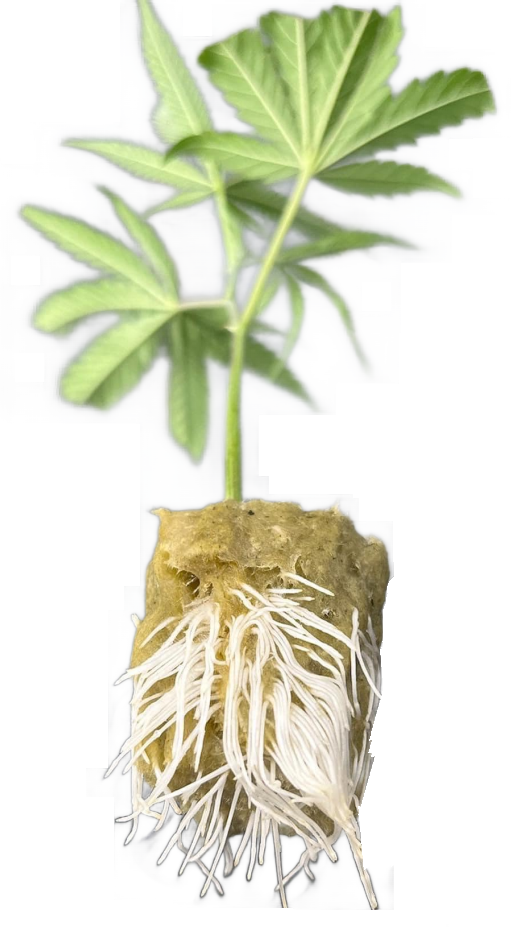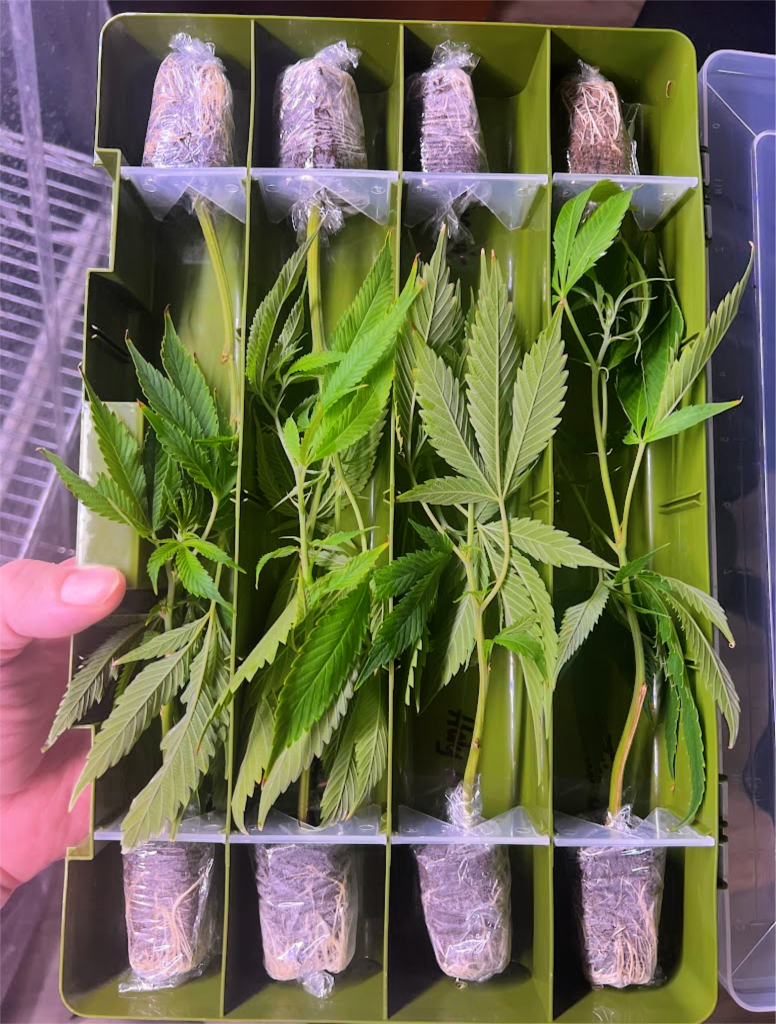



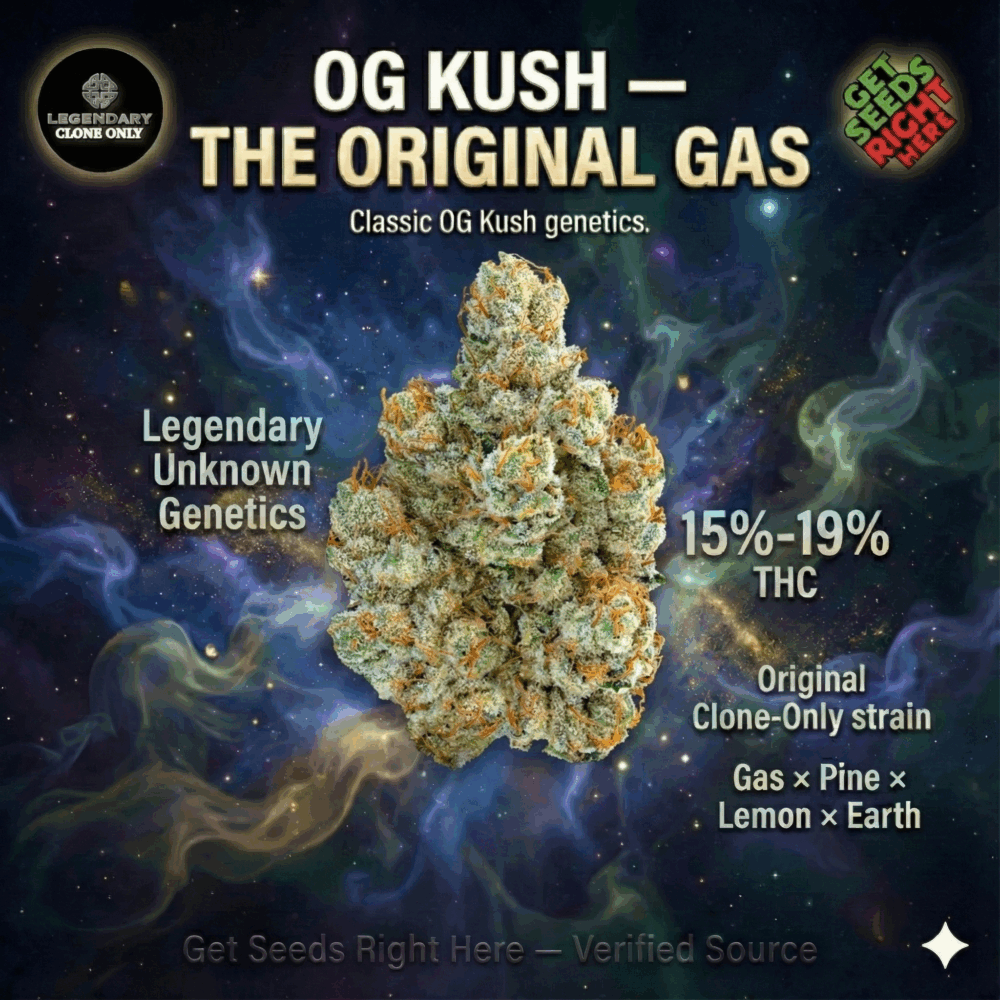

In the pantheon of cannabis genetics, few names carry the weight, the mystique, or the sheer market dominance of OG Kush. It is the genetic backbone of the modern West Coast cannabis industry, the "King of Kings," and a strain that defined an entire generation of cultivation. But the story of OG Kush is not just a botanical history; it is a human drama filled with secrecy, betrayal, unintentional invention, and the "legacy market" code of honor that governed the underground growers of the 1990s and 2000s.
To understand OG Kush is to understand a timeline that stretches from a lucky bag seed in Florida to a crawl space in Los Angeles, through a deceptive hand-off to the "Sour Crew," and finally into the fragmented world of forum-famous phenotypes like Ghost, SFV, and Tahoe. This is the unvarnished history of the strain that changed everything.
Table of Contents
The Florida Genesis: Matt “Bubba” and the Accident of 1991
The story begins not in the emerald hills of Northern California, but in the humid, low-altitude climate of Florida. The year was 1991. The cannabis market in the United States was heavily reliant on imports—compressed Mexican brick weed, Colombian gold, and the occasional skunk from the Pacific Northwest. But in Florida, a grower known as Matt "Bubba" Berger was about to stumble upon a genetic anomaly.
The lore, confirmed by years of interviews with the primary players, states that Matt was working with a "Supernaut" strain (likely a Kryptonite cross). However, the pivotal moment came when he inadvertently pollinated a plant—or, in some tellings, received a bag of remarkably high-quality flower that contained a few mature seeds. The genetics of this bag were unknown, though retrospect suggests a lineage involving Chemdawg (itself a legend of bag-seed fortune from a Grateful Dead show in Deer Creek, Indiana).
When Matt grew these seeds out, one phenotype stood out aggressively. It was not a massive yielder. It was not easy to grow. But the smell was unlike anything else on the market—a sharp, gas-soaked lemon-pine aroma that stung the nostrils.
As the story goes, Matt’s friend looked at the frosty, dense nuggets of this new creation and remarked that they looked like "Kushberries," a colloquialism for high-quality berries. The name was shortened, simply, to "Kush." It is a point of crucial historical accuracy to note that this "Kush" had no direct verified connection to the Hindu Kush mountain range landraces at the time. It was a name born of slang, not botany. But the name stuck.
The Move West: Josh D and the Silver Lake Crawl Space
While Matt Berger held the genetics in Florida, the destiny of the strain lay in Los Angeles. In 1996, Matt Berger moved to LA, linking up with a fellow grower and friend, Josh Del Rosso, known in the industry simply as Josh D.
Josh D is arguably the most significant figure in the preservation and popularization of OG Kush. When Matt arrived in LA, he brought with him two critical things: the "Bubba" cut (which would later become Bubba Kush) and the "Kush" cut (which would become OG Kush).
The two friends set up a small, clandestine grow operation in the crawl space of a rental house in the Silver Lake neighborhood of Los Angeles. The conditions were far from the high-tech, sanitized facilities of the modern legal market. They were working with limited height, limited airflow, and the constant paranoia of the prohibition era.
It was here, in this Silver Lake crawl space, that Josh D realized the true potential of the "Kush." The plant was notoriously finicky. It was prone to powdery mildew, it stretched aggressively in flowering, and it produced a relatively low yield compared to the "cash cropper" strains of the day like Big Bud or Northern Lights. Most commercial growers would have culled it immediately.
But the finished product was undeniable. It tested off the charts in potency (long before lab testing was standard), and the terpene profile was so loud it could penetrate double-bagging. Josh D and Matt realized they had something that could command a premium price point. In the late 90s, while high-grade indoor was selling for $3,000 or $4,000 a pound, the "Kush" from the Josh D crew was fetching upwards of $8,000. It became the status symbol of the LA music industry, finding its way into the hands of rappers, rock stars, and the Hollywood elite.
They dubbed it OG Kush. While debates have raged for decades about what "OG" stands for—"Ocean Grown" being a popular theory attributed to a grower living near the Pacific—Josh D has consistently maintained that in their circle, it simply meant "Original." It was the Original Kush, distinct from the many imitators that were already beginning to pop up.
The Betrayal: Mojave, The Sour Crew, and the Birth of Headband
As the legend of OG Kush grew, so did the circle of trust. In the clandestine days of the legacy market, genetics were currency. You didn't just give a cut to anyone; you gave it to trusted partners who would keep the price high and the genetics pure.
Enter Mojave Richmond, a talented cultivator and a close associate of the Josh D crew. Mojave was part of the inner circle, entrusted with the sacred OG cut. However, the world of elite cannabis was small, and the East Coast had its own royalty: the "Sour Crew."
The Sour Crew, based largely around the New York/East Coast scene and associated with figures like AJ (Asshole Joe), were the custodians of Sour Diesel. The rivalry—and mutual respect—between the West Coast Kush growers and the East Coast Diesel growers is a defining dynamic of 90s cannabis culture.
The incident in question is one of the most fascinating pieces of cannabis lore. Josh D, protective of the market value and the exclusivity of his OG Kush, gave Mojave Richmond a strict instruction: Do not pass this cut to the Sour Crew. He knew that if the Diesel guys got hold of the Kush, they would master it, cross it, or flood the market, diluting the exclusivity the LA crew enjoyed.
Mojave Richmond, however, made a different call. Whether out of friendship, a desire to trade for Diesel genetics, or simply the grower’s impulse to spread fire genetics, Mojave decided to give the cut to the Sour Crew.
But he had a problem. He couldn't just hand over "The OG Kush" without Josh D finding out eventually. The cannabis world was too small; word would get back. So, Mojave devised a deception.
He handed the clone to the Sour Crew, but he gave them a specific instruction: "Do not call this OG. Call it Headband."
He fabricated a new identity for the plant to mask its origin. He likely chose the name "Headband" because of the strain's specific physiological effect—a sensation of pressure around the crown of the head, like a halo or a headband, which is a common trait of high-potency OG phenotypes (often due to vasodilation).
The Sour Crew took the cut and grew it out. They followed instructions. They didn't sell it as OG Kush; they sold it as Headband.
Here is where the "unintentional legendary strain" comes into play. The Sour Crew, being master growers, dialed in this "Headband" cut. The East Coast market, already in love with the gassy, fuel-heavy profile of Sour Diesel, went crazy for Headband. They believed it was a distinct genetic, possibly a cousin of Diesel or a new hybrid.
Over time, the lines blurred. Because the Sour Crew was growing it alongside their Sour Diesel, accidental pollinations and intentional breeding projects (Sour Diesel x OG Kush) eventually solidified "Headband" in the public consciousness as a cross between Sour Diesel and OG Kush. And indeed, later versions were crosses. But the "Legacy" truth, confirmed by the Josh D circle, is that the original Headband that hit the scene was simply the OG Kush cut, renamed and rebranded by Mojave Richmond to hide a transaction he wasn't supposed to make.
This single act of deception created a "ghost" strain—a legend born from a lie—that eventually became real through the power of branding and subsequent breeding.
The Forum Era and the Splintering of the Phenotypes
As the 2000s rolled on, the secrecy of the Silver Lake crawl space gave way to the information age. Websites like Overgrow.com, ICMag (International Cannagraphic), and THCFarmer became the digital meeting grounds for the world's best growers.
It was on these forums that the "OG Kush" monolithic myth began to fracture into specific "cuts." Growers who had managed to acquire these clone-only genetics—often at high cost or through complicated trades—began to notice differences. Whether due to genetic drift, environmental stress (epigenetics), or slight variations in the bag seeds found over the years, distinct "phenotypes" of OG Kush emerged.
Three specific cuts rose to the top, becoming legends in their own right: Ghost, SFV, and Tahoe.
1. The Ghost OG
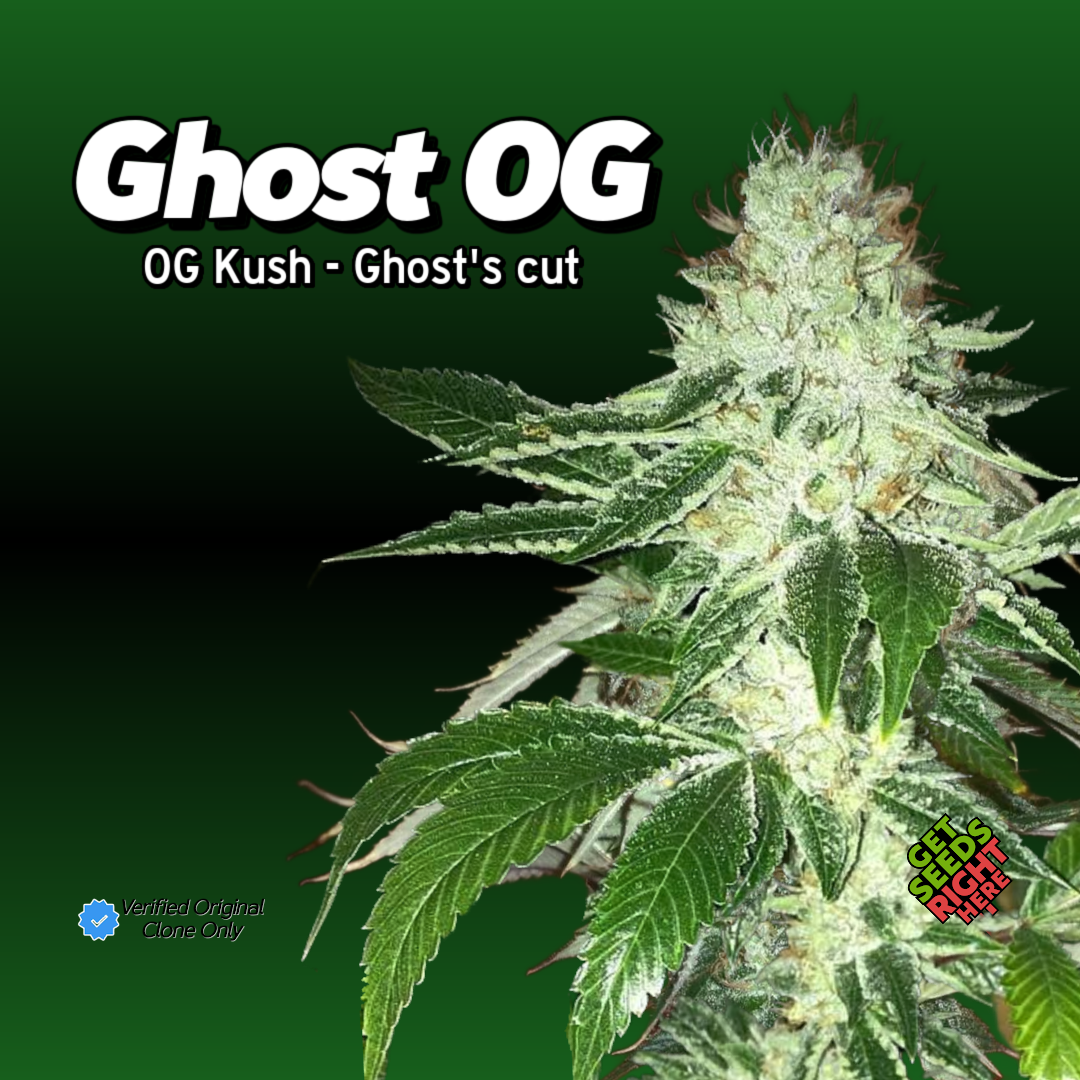
Ghost OG Clones
The "white" cut. Famed for its aesthetic perfection and dense trichome coverage.
Shop Ghost OGThe Ghost OG is perhaps the most coveted of the forum-era cuts. Its name comes from a forum member on Overgrow.com who went by the handle "Ghost."
The story goes that Ghost acquired a cut of the OG Kush from another forum legend, OrgnKid (who was instrumental in selling and spreading high-end genetics in the early internet days). However, the cut Ghost held was slightly different from the standard Josh D planter.
The Ghost OG is renowned for its aesthetic perfection. It is often described as the "white" cut. It produces trichomes so thick and dense that the buds appear dipped in sugar. While the nose is pure OG—pine, lemon, fuel—the Ghost cut is often considered sweeter and more floral than the aggressive gassy funk of the original.
It grows with more vigor than the notoriously slow original, but it retains the classic OG structure: lanky, needing support, with golf-ball-sized nuggets. For many connoisseurs, the Ghost OG represents the "top shelf" visual appeal of the lineage, the version that wins Cannabis Cups on bag appeal alone.
2. The SFV OG (San Fernando Valley)
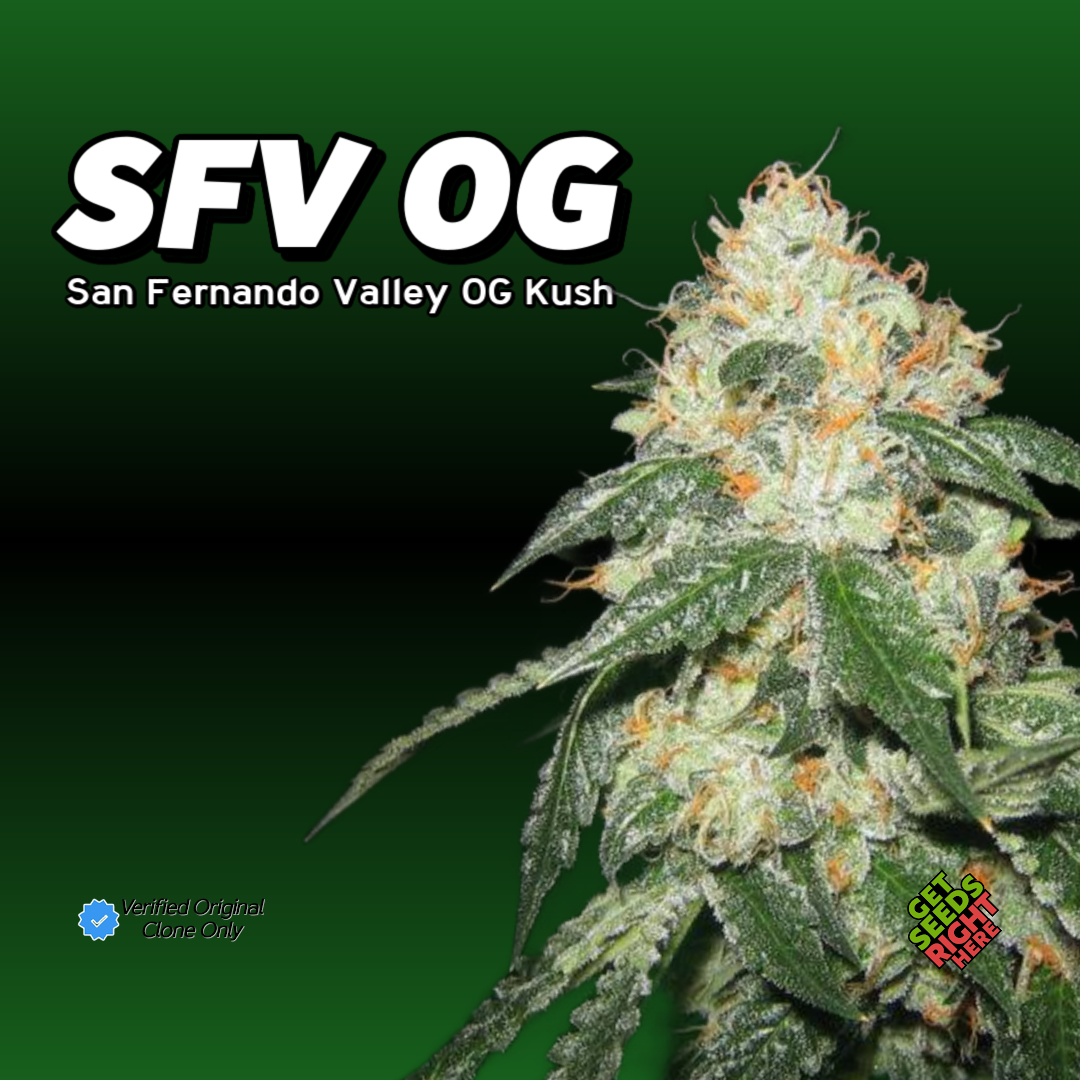
SFV OG Clones
The Valley Legend. A sativa-leaning OG with a distinct Lemon Pledge terpene profile.
Shop SFV OGThe SFV OG is inextricably linked to a grower known as Swerve from The Cali Connection. As the name implies, this cut came out of the San Fernando Valley, the hot, sprawling suburban basin north of Los Angeles.
The SFV cut is often debated. Purists distinguish between the "SFV Cut" (the clone) and the "SFV OG" seed lines later produced by Swerve. The original SFV cut is characterized by its structure and its "sativa" lean. It is widely considered less body-heavy than the original OG. It hits the head hard and fast.
Botanically, the SFV cut is often described as "stemmier" and even harder to yield than the original. It demands high nitrogen and calcium. The flavor profile leans heavily into the Lemon Pledge and earthy pine spectrum, with less of the deep, chocolatey-fuel undertones found in the Bubba/Josh D lineage.
The SFV cut became the "working man's" OG in the Valley—the stuff that kept you functional but stoned, dominating the dispensaries that began popping up under California's Prop 215 medical laws.
3. The Tahoe OG
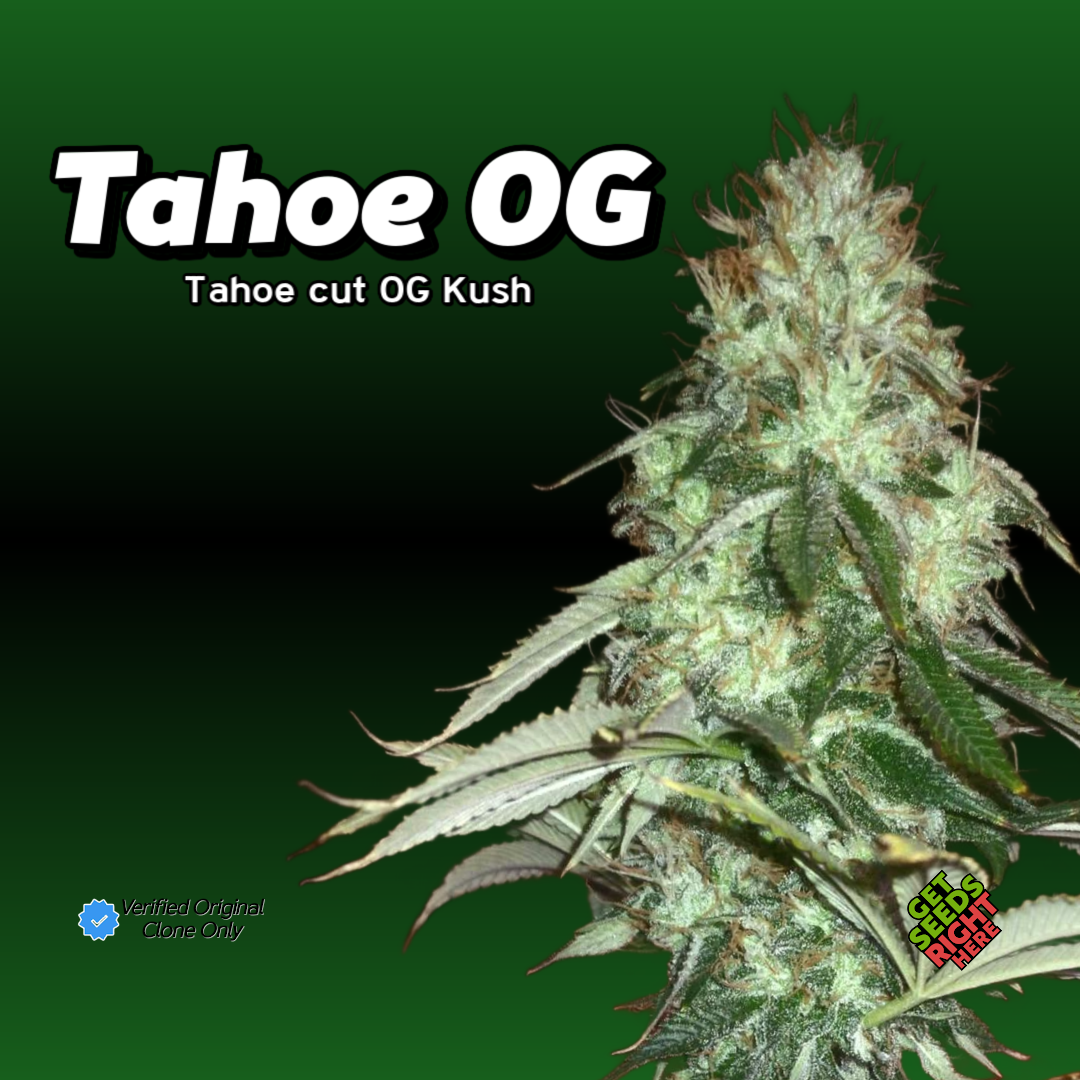
Tahoe OG Clones
The heavy hitter. Dark, funky, and sedative. The ultimate "nighttime" OG.
Shop Tahoe OGIf the SFV is the sativa-leaning city dweller, the Tahoe OG is the mountain-dwelling heavy hitter. Originating (or at least popularized) in the Lake Tahoe area, this cut is surrounded by theories regarding altitude.
Some growers believe the Tahoe OG is simply the original Josh D cut, but grown at high altitude and colder temperatures, which caused it to express different traits (thicker resin rails, purple hues, denser structure). However, most agree that the "Tahoe Cut" circulating in the market is a distinct phenotype or a very early self-pollinated cross.
The Tahoe OG is famous for one thing: sedation. It is the "nighttime" OG. While the standard OG Kush has a racy, cerebral kick before the body settles, the Tahoe OG skips the cerebral rush and goes straight to the muscles. It is heavier, darker, and funkier. The smell is often described as "rotten fuel" or damp earth mixed with the classic pine.
In the legacy market, if you wanted to "knock someone out," you grabbed the Tahoe.
The Josh D Original: The Standard Bearer
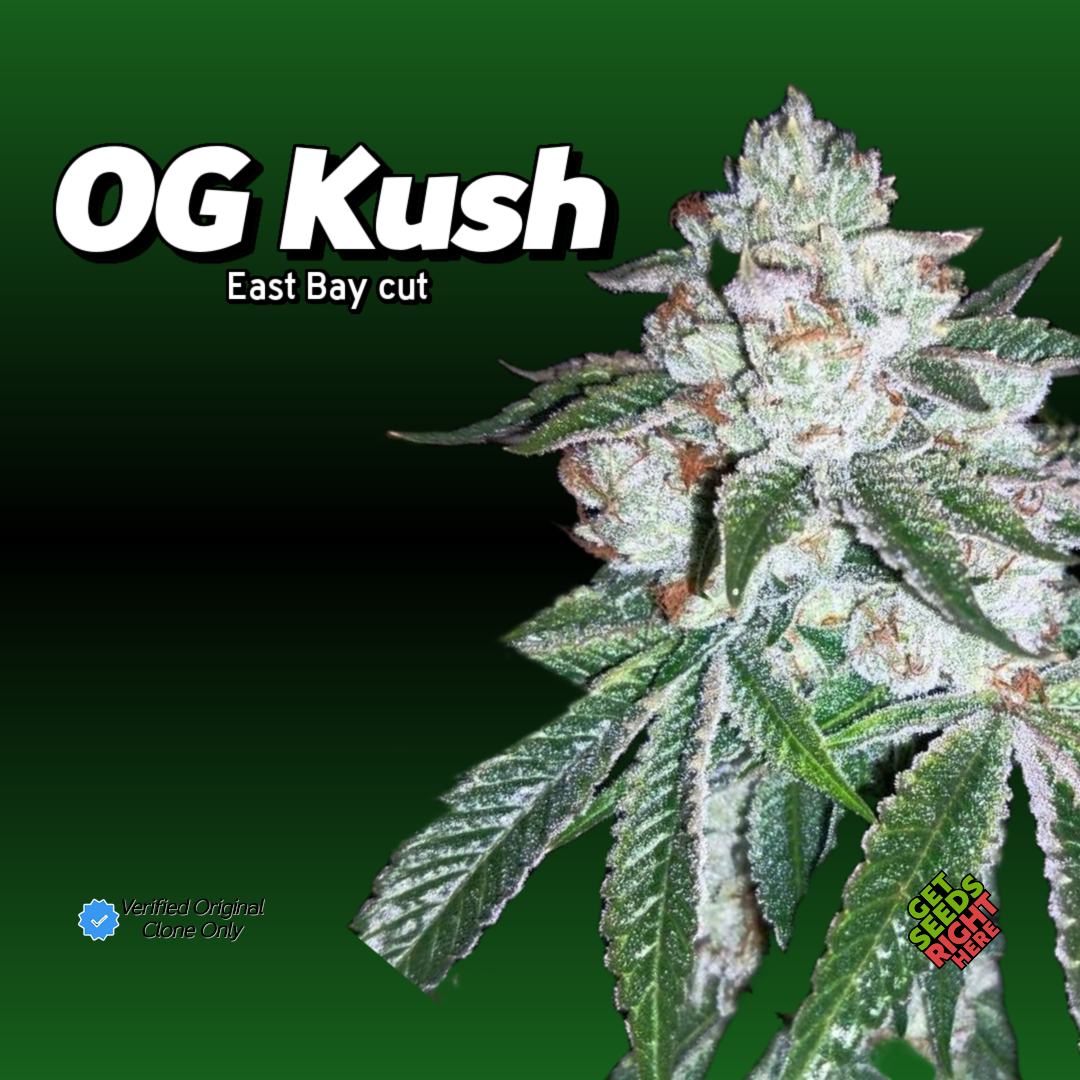
Original OG Kush Clones
The classic standard. The perfect balance of Lemon, Fuel, and cerebral power.
Shop OG KushThrough all the splintering—the Ghost, the SFV, the Tahoe, the Headband deception—Josh D kept the flame of the Original OG Kush burning.
The "Josh D Cut" (often just called "The OG") remains the reference point against which all others are measured. When you smoke the authentic Josh D cut, you are tasting the 1996 Silver Lake crawl space.
It is defined by a perfect balance that the other cuts skew one way or another. It has the Lemon (like SFV) but with the Fuel (like Tahoe). It has the cerebral expansion (like Headband) but with the body-crushing relaxation (like Bubba).
In recent years, Josh D has stepped out of the shadows of the legacy market and into the legal recreational market, creating the Josh D brand. He did this largely to reclaim the history. For nearly two decades, "OG Kush" became a generic term, slapped on any bag of weed that smelled remotely like pine. By releasing his original genetics and telling his story, Josh D effectively "open-sourced" the truth while trademarking the quality.
The Legacy of the "Legacy"
The story of OG Kush is the story of the American cannabis underground. It highlights the peculiar dynamics of an industry that operated in the dark.
Trust and Betrayal: The tension between Josh D wanting to protect his IP and Mojave Richmond wanting to share (or trade) it reflects the constant struggle growers faced.
The "Headband" Anomaly: The fact that a simple renaming strategy to avoid a "beef" created a global strain phenomenon is a testament to the power of branding in cannabis. The "Headband" name primed users to feel a certain way, and the genetics backed it up.
The Forum Culture: The differentiation of Ghost, SFV, and Tahoe proves that cannabis enthusiasts are hyper-observant. They noticed subtle epigenetic shifts and enshrined them as new legends.
Today, OG Kush is more than a strain; it is a breeding platform. Girl Scout Cookies, Gelato, Runtz, Wedding Cake—almost every modern "exotic" strain has OG Kush somewhere in its lineage (often via the F1 Durban x Florida OG cross that made GSC).
But if you peel back the layers of poly-hybrids and candy terpenes, you eventually end up back in Florida, with Matt Bubba looking at a bag of "Kushberries," and then moving to a crawl space in LA where Josh D told Mojave Richmond, "Don't give this to the Sour Crew."
Mojave did it anyway. And the weed world is better for it.
Extended Analysis: The Cultivation Characteristics of the Legends
To fully appreciate the gravity of these cuts, one must understand them from the grower's perspective. The "Legacy Market" wasn't just about smoking; it was about the struggle to keep these finicky plants alive.
- The "Vine" Structure: The original OG Kush is not a bush; it is a vine. Left to its own devices, it will stretch endlessly, producing significant internodal spacing (the space between branches). This is why the Screen of Green (SCROG) and trellis netting became standard practices in California indoor grows. The OG required support. If you didn't net it, the heavy, golf-ball buds would snap the branches.
- The Cal-Mag Hunger: Any grower who has run the SFV or the Original OG knows they are magnesium hogs. The plants often show deficiencies (rust spots on leaves) midway through flowering if not fed aggressively. This "finickiness" is a hallmark of the true genetics. If it grows easy, it probably isn't the real OG.
- The "Kush" Nose: The terpene profile of OG Kush is dominated by Myrcene, Limonene, and Caryophyllene. Myrcene provides the sedative, "couch-lock" effect. Limonene provides the mood elevation and the citrus snap. Caryophyllene provides the spicy, funky "kick" and interacts with the body's CB2 receptors to fight inflammation. It is this "Entourage Effect" of terpenes that makes OG Kush medically relevant for pain, anxiety, and insomnia, keeping it on dispensary shelves 30 years after its discovery.
Conclusion
The history of OG Kush is a tapestry of accidental genius and intentional deception. From Josh D's preservation instincts to Mojave Richmond's rebellious distribution, every step of the journey shaped the cannabis culture we know today. The Ghost, the SFV, the Tahoe—they are all children of that original crawl space in Silver Lake.
And somewhere, in a jar on a dispensary shelf, labeled "Headband," lies the botanical evidence of a 30-year-old secret: the time Mojave Richmond ignored an order, renamed a legend, and accidentally changed history.