




Cultivation • Genetics • Grow Guide
Mastering Cannabis Clones: The Science of Genetic Consistency
Why rolling the dice on seeds isn't always the best move, how to spot a healthy cut, and the crucial protocols for bringing new genetics into your garden without importing a plague.
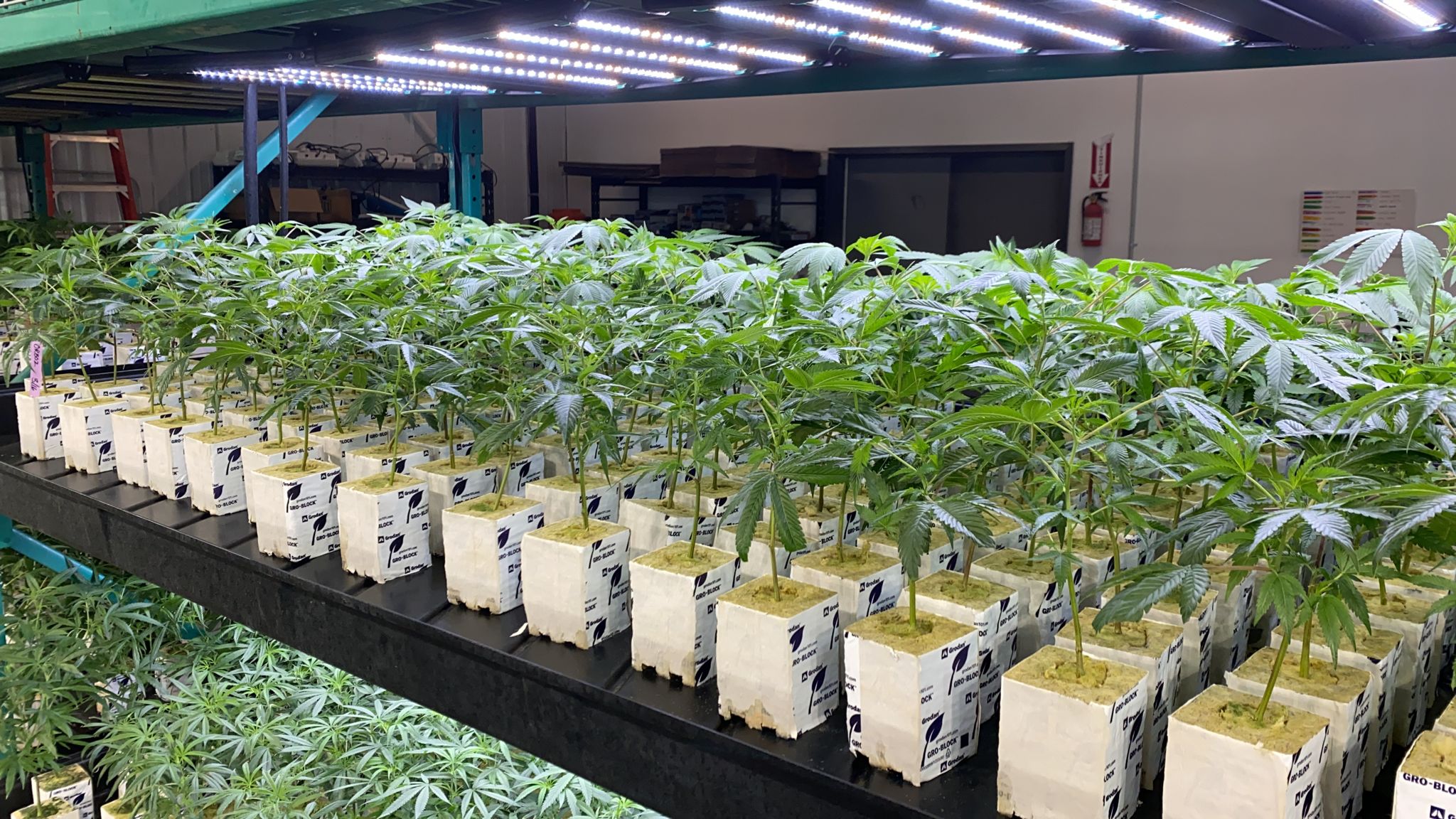
Image: A rack of healthy clones freshly transplanted into Hugo's.
TL;DR
- Clones vs. Seeds: Clones are genetic duplicates (twins) ensuring 100% consistency; seeds are genetic siblings with variations.
- The Guarantee: Starting with clones skips germination, guarantees female plants, and ensures you get a specific phenotype (flavor/potency).
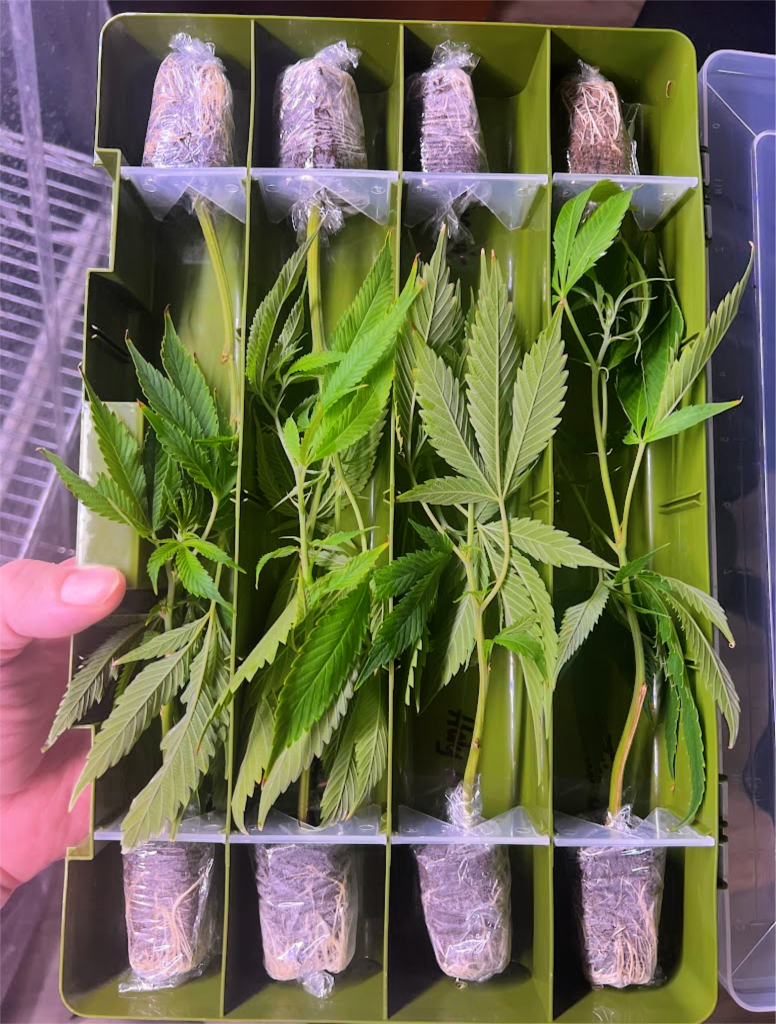
- The "Eye Test": Healthy clones have white roots, stiff stems, and vibrant green leaves. Avoid anything with spots, drooping, or visible pests.
- The Risk: Bringing in clones introduces the risk of pests (spider mites) and pathogens (HLVd). A strict quarantine protocol is mandatory.
- Tissue Culture: The gold standard for 2025/2026 is buying "Tissue Culture" clones to ensure disease-free stock.
- Acclimatization: New clones need a "hardening off" period to adjust to the light intensity and humidity of your grow room.
The allure of genetic certainty
There is a specific romance to popping a seed. You place it in the soil, you wait, and you watch nature unfold. It’s a genetic lottery. Maybe you find the next world-champion strain, or maybe you find a lanky male plant that dumps pollen all over your crop and ruins your harvest.
For the hobbyist with time to burn, that "pheno-hunt" is part of the fun. But for the grower who wants a guaranteed result—who wants to know exactly what their jar will smell like in four months—cannabis clones are the only answer.
Cannabis cultivation is an exercise in variable management. You control the light, the nutrients, the humidity, and the airflow. Why leave the most important variable—the genetics—up to chance?
A clone is not a sibling of the mother plant; it is the mother plant. It is a biological time capsule. When you buy a cut of "Blue Dream," you aren't just buying a plant; you are buying the exact genetic code that made that strain famous in the first place.
The biology: Seeds vs. Clones
To understand why clones are the standard for commercial facilities and serious home growers, you have to look at the biology.
Seeds are heterozygous. Even if you buy a pack of "stabilized" seeds, there is variation. Think of it like a human family. You and your siblings share the same parents, but one of you might be tall with blue eyes, and the other short with brown eyes. In cannabis, these variations are called phenotypes. One seed might yield a heavy yielder with low potency, while its sister is low yield but high potency.
Clones are homozygous. A clone is created through asexual propagation. By taking a cutting from a mother plant in the vegetative stage, we bypass the genetic shuffling of reproduction.
The three major benefits of the clone:
- Consistency: Every plant grows the same height, eats the same amount of nutrients, and finishes flowering at the exact same time. This makes managing your canopy infinitely easier.
- Speed: Clones are sexually mature the moment they root. You shave weeks off your timeline because you don't have to wait for a seedling to mature or sex the plants to remove males.
- Feminization: If the mother is female, the clone is female. Zero wasted space growing males.
Vetting your source: The "Eye Test"
The internet has revolutionized how we access genetics. You can now order clones online and have them shipped to your door in discreet packaging. However, whether you are buying online or walking into a local dispensary to pick up a tray, you need to know how to identify a healthy plant.
Bad clones are the number one vector for destroying a grow room. I have seen entire crops wiped out because a grower brought in one infected cut that was carrying Russet Mites or Powdery Mildew.
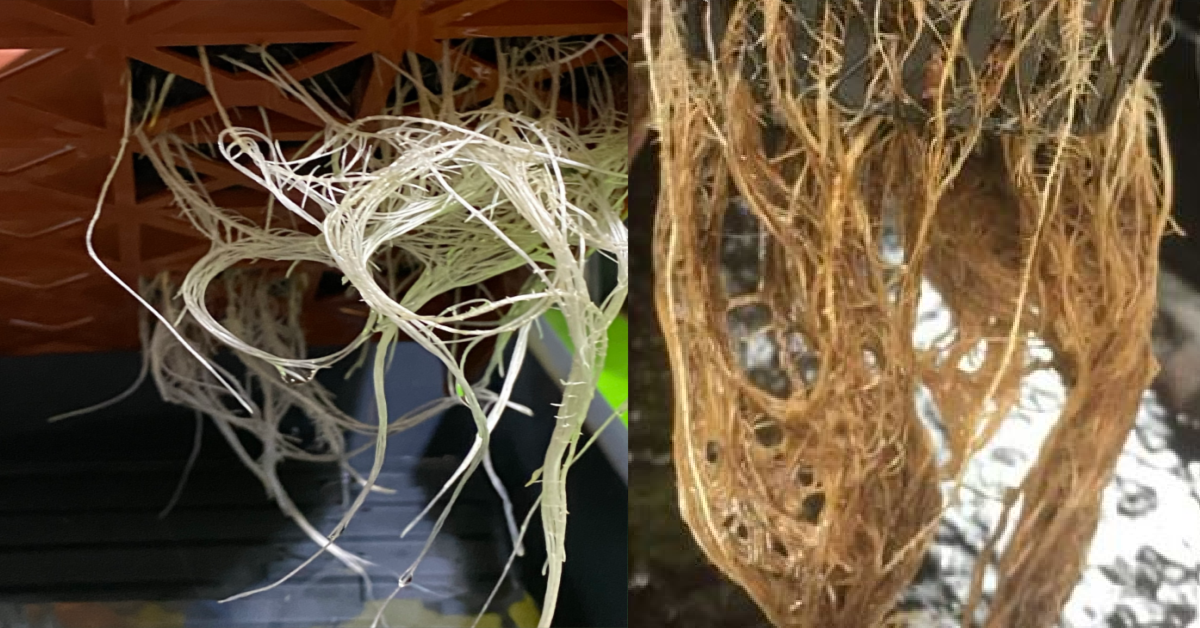
Image: Left: Healthy, fuzzy white roots. Right: Root rot (Pythium) symptoms to avoid.
The Checklist:
- The Roots: If you can see the cube or plug, look at the roots. They should be bright white and fuzzy (root hairs). If they are brown, slimy, or smell like a swamp, put it back. That is Pythium (root rot).
- The Leaves: You want a consistent, vibrant green. Yellowing at the bottom is acceptable (the plant is using stored energy to make roots), but spotting, stippling (tiny white dots), or burnt tips are red flags.
- The Stem: The stem should be thick and sturdy. A thin, spindly stem indicates the plant was grown in low light and will struggle to support heavy buds later.
- The Pests: Look under the leaves. If you see tiny black specks, webs, or anything moving, run away. Do not try to "fix" a bug-infested clone. It is not worth the war you are about to start.
The modern era: Tissue Culture
If you are reading this in 2025 or later, you need to know about Tissue Culture (TC).
For decades, clones were just cuttings taken from a mom in a garage. The problem is that over time, plants accumulate "genetic drift" and systemic pathogens. The biggest boogeyman in modern cannabis is HLVd (Hop Latent Viroid). It is an invisible pathogen that causes "dudding"—plants that just stop growing, lose potency, and become brittle.
Tissue Culture is the solution. This is a laboratory process where a microscopic slice of the plant's meristem (the newest growth) is sanitized and grown in a sterile agar medium. This process scrubs the plant of viruses, pests, and bacteria.
If you have the option to pay $50 for a garage cut or $100 for a Tissue Culture verified clone, pay the extra money. You are paying for a clean slate.
The Quarantine Protocol (Do not skip this)
Here is the golden rule of cloners: Trust no one.
Even if you bought your clones from your best friend or the highest-rated nursery in the state, you must treat them as if they are radioactive until proven otherwise.
Never put new clones directly into your main grow room.
Set up a small quarantine area (a separate tent or even a cardboard box with a small light) in a different room. Keep the new clones there for at least 14 days. During this time:
- Inspect them with a 60x jeweler's loupe every single day.
- Apply a preventative IPM (Integrated Pest Management) spray, such as simple soapy water or essential oil blends, to ensure they are clean.
- Monitor for vigor. If a plant is growing significantly slower than the others, cull it. It’s better to lose one plant now than your whole harvest later.
Acclimatization: The first 72 hours
Shipping or transporting clones is traumatic for the plant. They have gone from a warm, humid dome to a dark box, and now into your grow room. They are in shock.
1. Light Intensity: Do not blast them with your full grow lights immediately. Your clones are babies. If you are using LEDs, dim them to 25% or raise the lights high. They need to establish roots before they can process high-intensity light.
2. Humidity (VPD): Clones have small root systems. They drink mostly through their leaves. If your room is dry (under 50% humidity), they will transpire too fast, wilt, and die. Use a humidity dome for the first few days, slightly venting it more each day to "harden them off."
3. Watering: New growers love to drown clones. The roots need oxygen as much as they need water. The medium should be moist, like a wrung-out sponge, not soaking wet.
The legal landscape
Finally, we have to talk about the law. While the 2018 Farm Bill opened up massive loopholes regarding "hemp clones" (since clones contain less than 0.3% THC), the legality of shipping and possessing cannabis plants varies wildly by state.
In legal recreational states, there are limits on your "plant count." For example, you may be allowed 6 plants. Remember: Clones count as plants. If you have 6 flowering plants and you buy 6 clones for the next run, you now have 12 plants and may be technically breaking the law.
Always check your local jurisdiction's specific cultivation laws before ordering.
Frequently Asked Questions
What is the difference between an "Auto" and a Clone?
Clones are "Photoperiod" plants, meaning they rely on light cycles to flower. "Autoflowers" are grown from seeds that flower automatically based on age. You generally cannot clone Autoflowers effectively because they have a biological ticking clock.
How long can I keep a clone in the fridge?
Believe it or not, you can store unrooted cuttings in a refrigerator (in a damp paper towel and Ziploc bag) for 2-3 weeks before rooting them. This is a great way to pause your grow if life gets busy.
Why are my clones turning yellow?
Yellowing lower leaves is normal; the plant is cannibalizing mobile nutrients (Nitrogen) to build roots. However, if the yellowing is at the top (new growth), you likely have an immobile nutrient deficiency or a pH issue.
Can I take a clone from a flowering plant?
Yes, this is called "Monster Cropping." It takes much longer to root and the plant will grow weird, bushy branches as it reverts back to the vegetative stage, but it results in incredibly bushy plants.
Is it better to buy clones or grow from seed?
If you want consistency, speed, and a specific flavor profile, buy clones. If you want to hunt for something new and don't mind the risk of males or variation, grow from seed.